

Navigating Low Slope Commercial Roofing Insurance Coverage After a Storm
When you own a valuable property in the established neighborhoods of Lake Highlands or Vista Ridge, managing that asset is already complicated enough. You deal with tenants, local ordinances, fluctuating budgets, and the general wear-and-tear of Texas weather. When disaster strikes-a hailstorm tears through or high winds rattle the structure-the last thing you need is a massive layer of stress layered on top of your existing worries.
Many property owners treat roof failure as merely "a leak." But to me, after years in this business, that framing is incomplete. The true cost of a failed low-slope commercial roof isn't just the material replacement; it’s the disruption. It is the headache of managing multiple contractors, the uncertainty of lost business during downtime, and the immense financial stress of unexpected structural failure.
I first got my hands dirty on job sites decades ago, learning that every roof tells a story of the weather it has weathered. What I've learned over time-and what I want to share with you as your neighbor-is this: proper planning is the single best way to mitigate the financial anxiety that sudden weather events can cause. Before we even talk about insurance policies, we need to address structural integrity. We are not here for panic repairs; we are here for a comprehensive assessment of what needs to be done to protect your investment and ensure your business continuity.
The Technical Basics: What Low-Slope Roofing Actually Is (And Why It Needs Special Attention)
To understand the risks, you first have to understand the material itself. When people think of roofing, they often picture asphalt shingles-the kind that give us a little bit of curb appeal and are designed to shed water downward. Flat roofs, or low-slope commercial roofing, operate on entirely different principles. They don't rely on gravity to pull the water away; they rely on continuous, impermeable membranes.
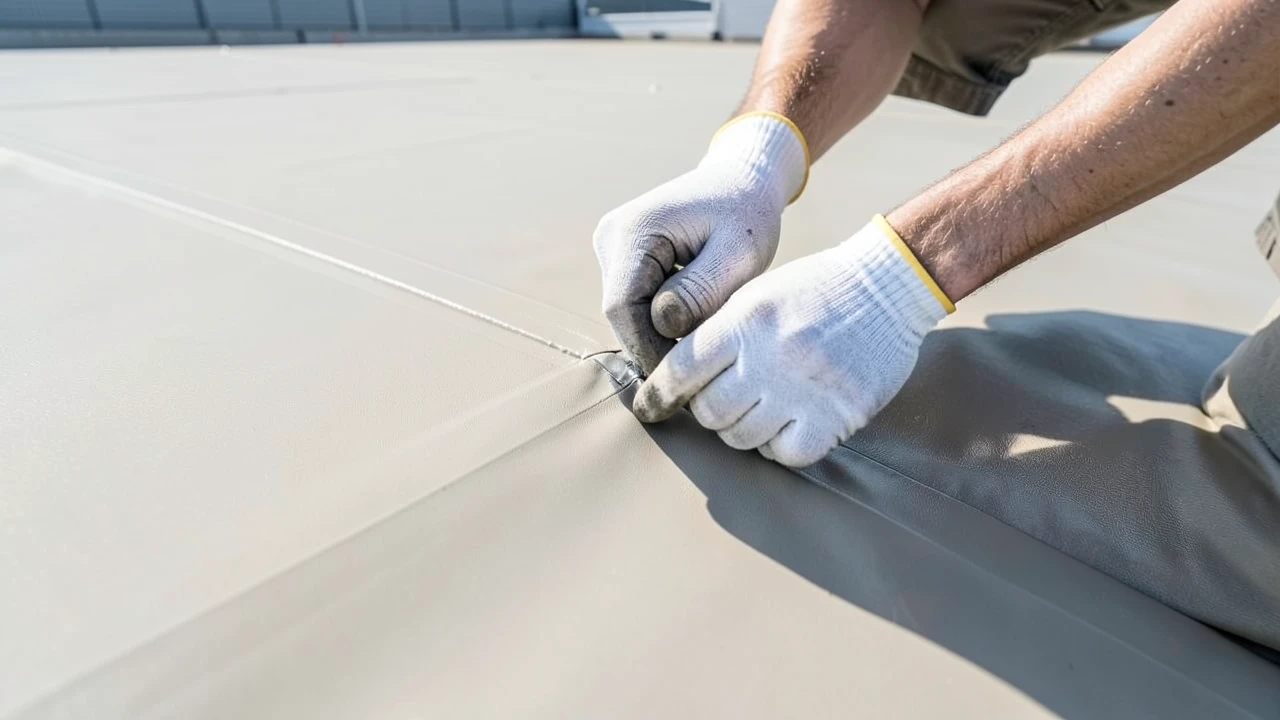
These systems typically use robust materials like TPO (Thermoplastic Polyolefin), Modified Bitumen, or EPDM rubber. These are industrial-grade polymeric fabrics that form a single, seamless watertight blanket over the entire structure. Think of it less like siding and more like a huge, specialized waterproof skin for your building.
The critical difference between a sloped roof and a low-slope roof is this: on flat roofs, the failure point is rarely visible damage like a missing shingle. The danger usually hides in the seams, the flashing around HVAC units, or areas where the membrane has been stressed by water pooling (ponding) over time or degraded by intense UV exposure.
Because these systems are built to be continuous and reliable-often covering vast commercial footprints-they require a different maintenance mindset. We need to look beyond cosmetic damage and assess the full protective layer of the underlying underlayment, ensuring that the entire system is sound before any storm hits.
Decoding Coverage: Navigating Low Slope Commercial Roofing Insurance Coverage
This is often the most confusing, and frankly, scariest part for property owners. When discussing low slope commercial roofing insurance coverage, it is vital to understand precisely what your policy does cover-and perhaps more importantly, what it does not.
Insurance policies are designed to protect against sudden, unexpected loss or damage. They are excellent safety nets, but they are not a perpetual maintenance fund. For example, if the roof starts showing signs of pre-existing wear due to age, poor drainage that has developed over years, or minor material stress from temperature fluctuations-these are often categorized as deferred decay or general depreciation. While certainly a concern, these types of issues may fall outside the scope of typical storm damage riders on your policy.
Common policies like Builder's Risk or specific Commercial Dwelling Coverage will generally cover sudden and accidental failure resulting directly from an enumerated peril (like wind lift or hailstones). But you must look closely at the fine print. Does your policy require professional grade maintenance? Are there mandatory deductibles that could wipe out a small, but critical, section of damage?
To manage this complexity, I strongly recommend gathering all your insurance documents-including riders and exclusions-well before any major weather event is forecast. Understanding the specifics of low slope commercial roofing insurance coverage means having all those policy documents in hand when an emergency occurs, so you aren't making decisions based on panic.
"When a property owner thinks about damage, they focus on the leak. I always guide them to think about the process-the headache and the downtime that follows the failure." – David Miller
Beyond the Claim: How Experts Assess True Low-Slope Roofing Damage
Once damage has occurred, whether minor or major, how do you know what is actually wrong? This is where the difference between a good contractor and an expert becomes crystal clear. The greatest danger here is relying solely on visible signs.
A superficial inspection might show tears in the membrane surface, but the real issue could be invisible: hairline cracks developing along critical seams due to thermal expansion stress; or compromised flashing materials around penetrations like air conditioning units that are now acting like tiny water funnels. These subtle failures can lead to catastrophic internal damage over a short period of time.
A reputable contractor performing a thorough commercial roof inspection Lake Highlands will utilize specialized tools and techniques that go far beyond what the naked eye can see. They assess the underlying structural components, not just the top layer.
It is also natural to worry about being overcharged or upselling unnecessary services. A transparent expert addresses this concern head-on by providing a detailed scope of work. Instead of simply saying "Replace the roof," they will say: "We are replacing the membrane because we found three compromised seams, and we must replace the flashing around the main exhaust vent to prevent future water intrusion." They explain why each component needs replacement, giving you clarity rather than just a high price tag.
Protecting Your Investment: Proactive Strategies for Lifetime Roof Integrity
The most effective way to manage roofing costs-and your overall peace of mind-is by shifting the focus from reacting to failure (insurance claims) to actively preventing it. This is about treating your roof not as an expense, but as a long-term investment.
This proactive approach centers on preventative maintenance plans. Routine inspections and minor spot repairs are exponentially cheaper than waiting for a full system replacement necessitated by a major storm event. Think of it like dental care; ignoring small issues leads to massive costs later.
When dealing with materials like TPO versus modified bitumen, the choice should be guided by your local climate and architectural needs, not just cost. We advise combining material manufacturer warranties (which cover defects in the product) with strong workmanship guarantees (which cover how the installation was done). It's crucial to understand if those warranties are genuine or limited-a thorough discussion of this is part of our consultative process.
Ultimately, maintaining your roof’s integrity isn’t just about keeping water out; it’s integral to overall property value and maintaining seamless curb appeal for your business or home in the Lake Highlands area.
Taking the Next Step: A Clear Path Forward for Your Property
The greatest cost associated with any roofing failure is not measured in dollars-it's measured in uncertainty. That uncertainty, that constant worry about when the next hailstorm will hit and how much it will cost to fix, is what we aim to eliminate.
My goal, as your local roofing expert, isn't to demand a booking or push you toward the most expensive option. Our process begins with listening. We start by having an open conversation about your specific concerns regarding your property-whether it’s a proactive investment review for the next five years, or if you are dealing with immediate post-storm assessment after a severe hailstorm event.
We will walk through every document, discuss the technical details of your low-slope membrane, and give you a clear picture of what true integrity looks like in this climate. When we finish our conversation, I want to make sure that does this help give you peace of mind about the estimate?
If you are concerned about the longevity or condition of your commercial roof, please don’t hesitate to reach out for a no-pressure chat. We treat every property in Lake Highlands and the surrounding communities with the utmost care and transparency.