
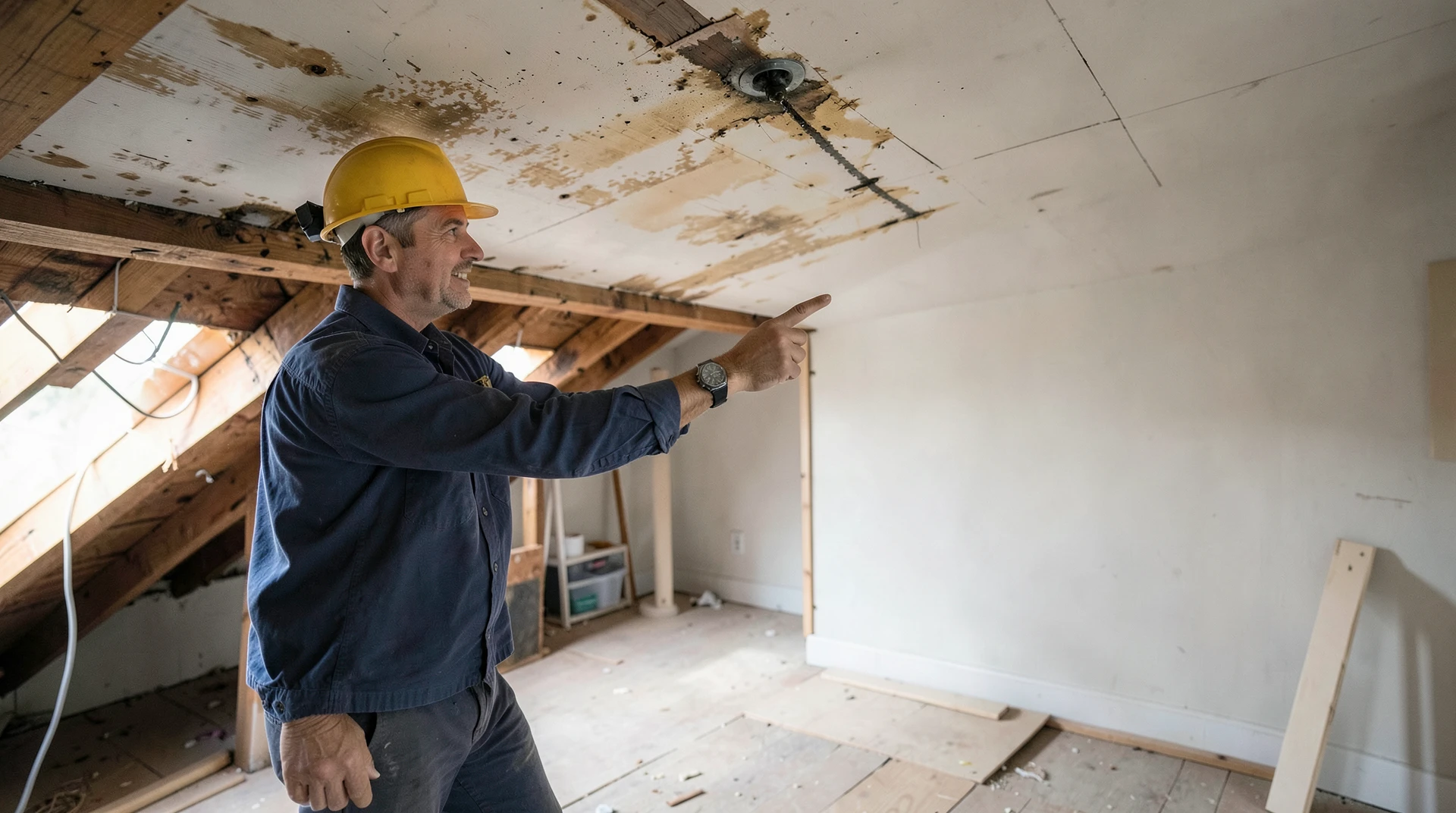
What Are Common Causes of Moisture Inside Due to Roof Leaks?
It is an immediate, visceral panic. You walk into your home-perhaps after a heavy Texas downpour or one of those unexpected hailstorms we get out near Indian Creek-and you see it: a stain on the ceiling, a damp patch in the attic, or perhaps even visible wood discoloration. If this is happening to you right now, please take a deep breath. The stress and worry that follow a leak can feel overwhelming, but understanding what’s going wrong is the first step toward peace of mind.
I’ve spent decades working with roofs across Lake Highlands, Green Park, and throughout our surrounding neighborhoods. I've learned one thing: when it comes to water damage, the visible stain is rarely the whole story. The true concern isn't just the damp spot; it’s what that moisture has done behind the scenes-the potential structural compromise. If you are asking yourself, “What are common causes of moisture inside due to roof leaks?” you are being proactive, and that is exactly where we need to start our conversation.
When Water Finds Its Way In: Understanding the Real Threat of Roof Leaks
When water enters a home from above, it acts like an insidious thief. It doesn't just cause cosmetic damage; it undermines the very structure of your house. We need to address this immediate panic first by understanding the gravity of the situation. Viewing a roof leak as merely "a stain" is dangerous because that spot represents a slow, persistent wound that requires professional attention far beyond simply applying caulk and calling it a day.
The danger goes far deeper than what you can see from your living room. Moisture damage creates secondary structural issues that compound the problem exponentially. We are talking about conditions like mold growth-which isn't just an aesthetic issue but a severe respiratory concern for your family. We’re also discussing wood rot in critical load-bearing elements like rafters and joists, which compromises the foundational integrity of your ceiling structure. Furthermore, compromised insulation loses its effectiveness as water saturation degrades its ability to regulate temperature, leading to higher energy bills and discomfort. For high-end homes, a major concern is even the electrical system: sustained moisture can lead to dangerous short circuits or corrosion in wiring and junction boxes-a risk that requires immediate professional evaluation.
A comprehensive assessment of a leak cannot simply focus on the visible entry point. A proper inspection must have an immediate scope that includes checking attic ventilation pathways, ensuring all drainage systems are clear, and looking for signs of water intrusion that might indicate why moisture is getting in, even if the source isn't immediately obvious.
This brings us to setting realistic expectations regarding diagnosis. Finding a leak’s root cause requires what I call the "roof hail inspection"-it means systematically assessing every material layer from the top down. It is not about finding the easiest patch; it is about identifying the weakest link in your home’s envelope. Trusting an assessment that only addresses superficial fixes risks the problem returning, and often with more damage than before.
The True Culprits: Common Structural Causes of Moisture From Above
To answer the question, what are common causes of moisture inside due to roof leaks?, we need to look past the shingles themselves and examine the system components beneath and around them. Most failures aren't caused by a single catastrophic event but by the cumulative failure of several small elements working together. These structural culprits are often overlooked until the water is already dripping onto your drywall.
Flashing Failure (The Primary Weak Point)
If I had to point to one area that fails most frequently, it would be flashing. This material-usually thin sheets of metal or specialized sealant-is designed to create a watertight seal around penetrations: chimney stacks, vent pipes, and any place where the roof plane changes. Think of flashing like placing a perfect, rubbery gasket around an expensive cup; if that seal fails anywhere, water will find the path of least resistance. The constant expansion and contraction from Texas's massive temperature swings put relentless stress on these metal edges, leading to hairline fractures or separation over time.
Poor Drainage & Debris Buildup
Gutters are often seen as just rain collectors, but they handle runoff from every source-downspouts, grading water, and sometimes even irrigation. When gutters become clogged with wet leaves, pine needles, or general debris, they can back up. This standing water forces hydrostatic pressure against the fascia boards and into the structure, effectively turning your drainage system into a slow-motion failure point that pushes moisture inward.
The Failure of Components (Underlayment & Capillary Action)
The underlayment is the critical waterproof membrane placed under the shingles. Its importance cannot be overstated. However, even the best membranes can fail where they meet other materials. We must discuss wicking. This process happens when capillary action-the natural tendency of water to travel upward through small spaces-pulls ground moisture or rainwater up through compromised underlayment or poorly sealed seams before it has a chance to reach your main framing.
Flash Point Analysis: The Thermal Stress Factor
Our climate is harsh, characterized by massive temperature shifts between day and night, and season to season. When metal components (like flashing or vent caps) expand in the heat and contract rapidly when temperatures drop, they create incredible stress-stress that manifests as tiny, invisible fractures. These micro-fractures are often the primary entry points for water because the material is literally being pulled apart by physics over decades of weather cycles.
The Hidden Vulnerabilities: Issues That Go Beyond Shingles
This is where many homeowners get tripped up in their thinking. They assume that if they see no visible leak, they have no problem. But I’ve seen roofs that look perfectly fine on the surface yet are failing due to hidden vulnerabilities. A truly expert assessment must consider everything surrounding the roof system.
Ventilation and Moisture Trapping
Moisture doesn't always arrive from the sky. Sometimes, it arrives through condensation. Improper attic ventilation is perhaps one of the biggest culprits. If you have too little intake (bringing cool air in) or not enough exhaust (removing hot, humid air), that trapped humidity will eventually meet a cooler surface-like a cold metal vent pipe or a wood joist-and condense into liquid water. This internal moisture can cause rot and mold even if the roof deck below is entirely "watertight."
Foundation & Grading Issues
A sophisticated understanding of roofing requires connecting it to your yard. Poor grading-meaning the ground slopes away from your house instead of sloping down away from your foundation-allows rainwater to pool against the exterior walls. This creates immense hydrostatic pressure. That pressure can force moisture deep into the crawlspace and up into the structural walls, making the issue seem like it originated at the roofline when the true cause is ground saturation.
The Deterioration of Sealants and Joints
Look closely at your skylights, vents, or any metal component attached to the structure. Over time, caulk around these joints and specialized flashing tapes degrade. They crack, they shrink, and they lose their elasticity. These seemingly minor failures accumulate stress points. When combined with thermal expansion/contraction (the culprit I mentioned earlier), these tiny decay spots become surprisingly effective entry points for water.
Addressing the 'Age' Factor
If your home has been on the market or in place for decades, you are dealing with multiple layers of original materials-some standard, some custom, and some built before modern building codes existed. This complexity is why relying solely on a quick visual inspection is risky. It requires an experienced eye, one that understands how these different eras of materials interact to predict where the next major failure point will be.
Restoring Integrity: A Transparent Approach to Full Roof Replacement
Given the numerous pathways for water intrusion-from flashing failures to improper grading-it often seems like nothing can ever be fully fixed. This is where transparency and a long-term vision become absolutely critical, especially when discussing roof replacement cost in Lake Highlands TX.
The Scope of a Proper Assessment (Addressing the Cost Objection)
When we conduct an assessment for you, my goal is not to sell you the most expensive thing; it's to prevent future failure. We must re-assure you that finding all issues upfront-from flashing deterioration to underlayment wear-is far cheaper than dealing with a catastrophic leak five years from now. A true assessment doesn’t just look at the shingles; we examine everything beneath, confirming structural integrity before discussing materials.
Understanding Material Science
The choice of material is a long-term investment decision. While quick patch jobs might use basic asphalt, I always advise looking at durable options like premium metal roofing or high-grade impact-resistant asphalt systems. These materials are designed not just to shed water, but to withstand the unique stresses of our local Texas weather-the intense heat, the severe hail impacts, and the dramatic temperature shifts. We deal in clear numbers based on longevity, not temporary fixes.
The Seamless Process (Minimizing Disruption)
I know that coordinating a major repair or replacement feels like an overwhelming job site. I want to preemptively address that pain point: we manage the hassle so you don't have to. Our process is designed to be seamless: first, the detailed assessment; second, a clear scope outlining exactly what needs fixing and why (so there are no surprises); third, transparent pricing with zero guesswork; and finally, minimizing disruption during the actual job-treating your property like it’s our own.
Why Local Expertise Matters in Lake Highlands/Green Park
Being local isn't just about being nearby; it means understanding the specific architectural styles and the common storm patterns unique to this part of Dallas-Fort Worth. We understand the typical materials used in neighboring properties, which helps us predict failure points that a contractor from another region might miss. This deep level of localized knowledge builds trust, neighbor by neighbor.
Next Steps Toward Peace of Mind and Structural Confidence
Ultimately, dealing with roof leaks is about regaining peace of mind and structural confidence. We need to move you from panic mode to action mode, using clear steps that empower you as the homeowner.
If a leak has been discovered or if you are simply concerned after a major storm, there are simple actionable self-checks you can perform immediately. You can observe which areas of your home are dampest or look for visible efflorescence (a powdery white residue) on exterior walls that signals moisture penetration. If you have access to the attic, monitoring any extreme levels of sustained humidity suggests a massive ventilation problem needing immediate attention from a professional.
However, there is a clear threshold where DIY solutions end and expert help must begin. You must call an expert immediately if you discover:
- Any visible signs of wood rot in rafters or joists.
- Major flashing failure that has allowed water into the attic space.
- Multiple points of seepage-meaning the leak isn't isolated to one single area.
Instead of requesting a bid, I recommend scheduling a complimentary "peace of mind chat" consultation with me. We can discuss your home’s history, what you are worried about, and walk through potential solutions without any pressure or sales pitch attached. My goal is simply to give you clarity on the true cost-not just of materials, but of time and stress that failure causes.
My signature perspective comes from years seeing homes fail due to small oversights. I can tell you this: The true cost of a roof isn’t the repair bill; it’s the unexpected downtime and disruption that follows failure. Let us help make your transition back to structural confidence seamless, so you can focus on enjoying what makes your home special. Roof Replacement. Home.