
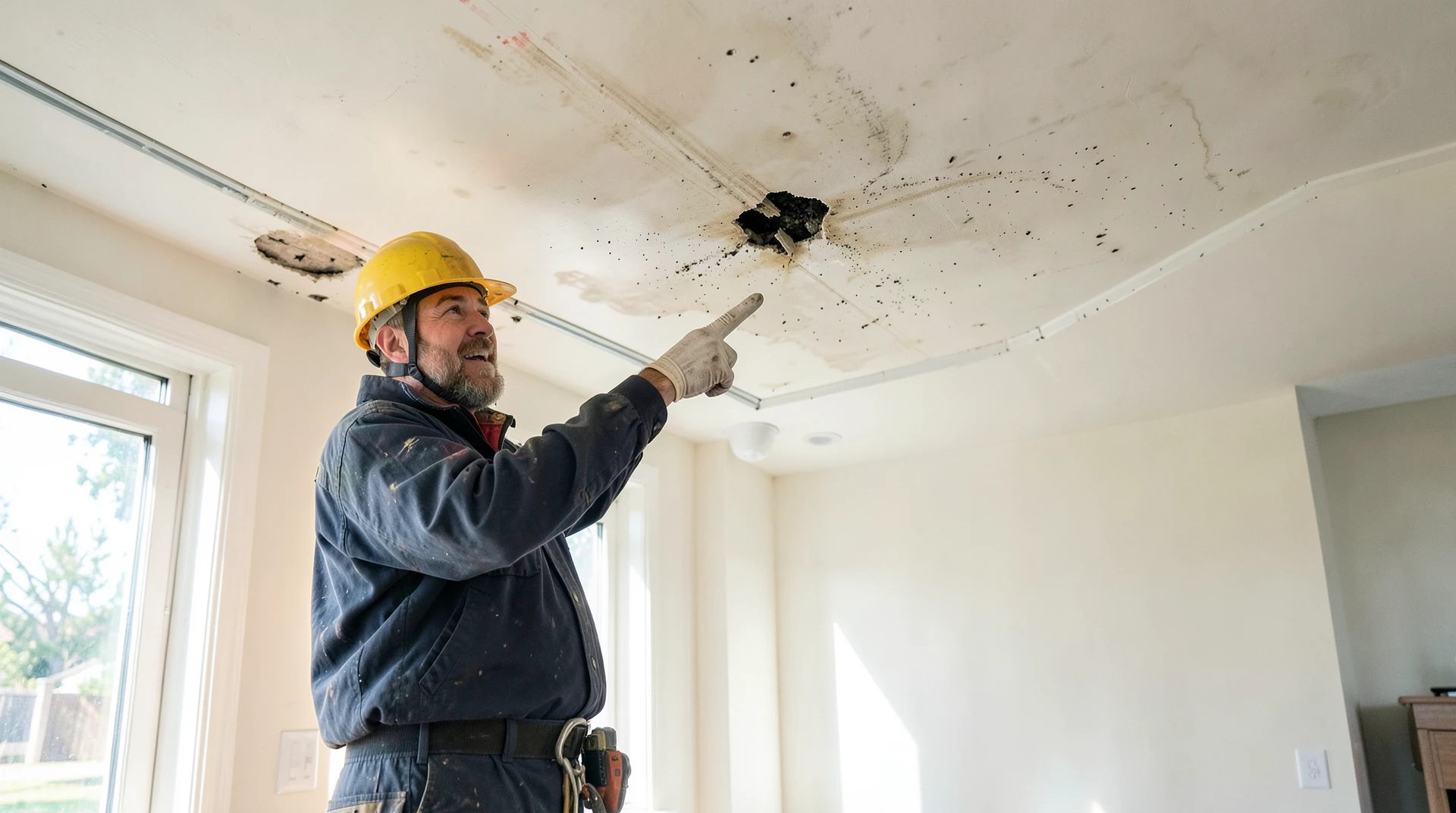
When you see the tell-tale signs-a dramatic water stain creeping across your ceiling, or waking up to find a patch of missing granules after a severe hailstorm-the first feeling is often sheer panic. It’s natural; your home feels compromised, and the thought of what might be wrong can be overwhelming. I've spent decades on job sites, and I know that when disaster strikes, our instinct is to fix it ourselves. But before you climb onto a ladder or try any temporary fixes, please take a deep breath.
Our first priority, always, must be human safety. Your physical well-being and the integrity of your family’s home are infinitely more valuable than any immediate patch job. We want to guide you through this process with clarity and confidence. By understanding what happens before the experts arrive, we can make sure that when help does get there, it's handled safely, efficiently, and correctly.
When Disaster Strikes: Your Immediate Guide to Emergency Roof Concerns
Acknowledge the Stress and Prioritize Safety
First, let’s talk about stress. Seeing visible damage-whether it’s a massive section of missing shingles or just persistent drips from flashing around your chimney-is genuinely terrifying. It feels like the foundation of your security has shifted. Please know that feeling anxious is completely normal. We are here to validate those feelings and guide you back toward calm, actionable steps. Remember this: your safety is paramount. Do not try to assess or fix structural damage yourself; defer all hands-on work until a professional team arrives equipped with the proper gear.
Initial Triage Steps (What NOT to do)
In that moment of panic, our natural inclination is often to grab the nearest ladder and go up there to "just look." Please resist this urge completely. Trying to climb onto a roof structure-especially one compromised by high winds or heavy hail-is extremely dangerous. The underlying decking might be weakened or warped, making it unstable under your weight. Likewise, applying temporary fixes (like stuffing materials into large cracks) can actually trap water and create more serious structural issues down the line. Your best action right now is to remain safe on solid ground while we begin gathering information.
Assessing Visible Damage: A Visual Checklist
While you should not enter the roof structure, there are several things you can safely observe from the ground that will be incredibly helpful when speaking with us. Think of this as evidence gathering. Look for obvious physical signs: Are large sections of shingles missing entirely? Is flashing (the metal seal around chimneys or vents) peeling away or bent? Or is there a massive, localized loss of granular material across an entire section? Documenting these visible issues-taking photos and notes about where the damage appears heaviest-allows us to give you a much more accurate preliminary assessment before we even step foot on your property.
The Role of Temporary Measures
Sometimes, waiting for the storm cleanup crew isn't feasible because rain is falling right now. In such cases, emergency tarping may be necessary. It is crucial to understand that an emergency tarp is only a temporary measure. Its purpose is to divert immediate water flow and prevent further internal damage until we can perform a full structural assessment and plan for permanent repairs. A professional team will ensure the tarp is installed correctly, diverting water away from vulnerable areas without masking underlying systemic issues.
Understanding Safety Protocols: The Importance of Professional Roof Access
The Dangers of Unauthorized Access
We cannot overstate the danger inherent in damaged roof structures. When severe weather hits-be it a hailstorm or sustained high winds-the entire system, from the decking beneath to the flashing seals, can become structurally compromised. These roofs are not designed to be climbed on by an amateur; they require specialized knowledge of load-bearing points and engineered access methods. For your peace of mind, we follow protocols that are far beyond just "being careful."
Defining 'Emergency Roof Access'
When we talk about emergency roof access, we aren’t talking about a simple ladder climb. We are describing an entire operational procedure involving meticulous site planning, specialized equipment setup, and strict adherence to safety guidelines tailored to the specific geometry of your home-whether that's a sprawling property near Indian Creek or a more compact build in Vista Ridge. This process involves engineering assessments before any worker even touches the roofline.
Key Safety Precautions During Emergency Roof Access
The foundation of our work is rigorous safety protocols. Because we are working at heights on potentially compromised surfaces, several safety precautions during emergency roof access are mandatory:
- Fall Protection Gear: Every person on the roof wears a full-body harness connected via lanyards to secure anchors. This is non-negotiable protection against falls.
- Scaffolding and Staging: We utilize professional scaffolding or ladder setups that distribute weight safely, ensuring nothing rests on an unstable point.
- Site Barricading: The perimeter of the job site is managed to keep unauthorized individuals far away from dangerous areas while work progresses.
- Dedicated Safety Personnel: There are always dedicated safety spotters and crew members overseeing the operation to ensure every protocol is followed, reinforcing that we prioritize your security as much as the roof itself.
Site Mitigation & Protection
Our commitment to safety extends beyond just our workers; it includes protecting your property during the repair process. We take exhaustive measures to mitigate disruption: covering valuable landscaping and garden beds, directing debris away from gutters, and ensuring construction runoff doesn't impact your foundation or yard. Our goal is to minimize the visible footprint of the job so that when we are done, your daily routine can resume as seamlessly as possible.
Beyond the Leak: How Experts Properly Scope Out Structural Damage
The Limitations of Visual Checks
Many homeowners assume that if a leak isn't currently dripping into their living room, everything must be fine structurally. This is where many people get overcharged or misled. A simple visual walkthrough from ground level can only tell us what’s visible; it cannot reveal critical issues like rotten decking underneath the shingles, compromised flashing seals hidden by landscaping, or advanced material fatigue that hasn't yet caused a visible leak. We need to look deeper than just the surface layer. If you are unsure about potential structural problems, remember that if you Need to know about roofing issues?, we can help guide your next steps.
Proper Inspection Process
Our inspection is a multi-step process designed for comprehensive analysis. It starts with a thorough visual walkthrough, moving into detailed physical examination of the underlayment and flashing details, and culminating in a material assessment. We check not just if the shingles are loose, but we evaluate the integrity of the underlying support structure-the decking itself-because that tells us the true age and structural health of your roof system.
The Difference Between Repair vs. Replacement
This is where years of experience make all the difference. Sometimes a small leak you're experiencing isn't due to a catastrophic failure, but rather an end-of-life flashing seal around a vent that needs replacing. Another time, however, the leak is simply the symptom of an entire aging system-the underlayment might be past its useful life, meaning a simple repair won't last long enough to matter. We help you understand this crucial distinction so you know if a targeted fix or full roof replacement is required for true structural longevity.
Understanding Your Options for Full Roof Replacement
When the damage dictates that replacement is necessary, we don't just slap on the cheapest material and leave. When discussing replacement needs, we review all available commercial roofing options, from durable metal roofing, which offers incredible longevity and modern aesthetics, to premium asphalt shingles tailored to your local Lake Highlands aesthetic. By understanding how different materials perform in Texas weather patterns, we ensure the solution aligns with both your budget goals and your long-term investment vision for the home.
Minimizing Disruption: Planning Your Seamless Roofing Restoration
Managing the Process Timeline
We recognize that coordinating a major construction project is stressful enough without adding roofing worries. To combat this anxiety, we provide clear, realistic timelines from day one. You will know exactly what to expect: when the initial assessment crew will arrive, how long the prep work will take, and when the final cleanup crew will wrap up. We manage the schedule so that you are always informed and never left in the dark about the process.
Project Management as Peace of Mind
Our role is not just installing shingles; it's acting as your full-service project manager. This means we handle the necessary permits from local authorities, coordinate dumpster removal, oversee all debris cleanup, and manage the entire flow of workers so you never have to juggle multiple contractors or deal with logistical headaches. Our goal is that the only thing you worry about is how great your newly protected home looks.
The Importance of Warranty Clarity
A reputable contractor doesn't just give you a warranty; they provide clear, written documentation covering two separate things: the materials and the workmanship. We insist on absolute clarity here because it gives you true peace of mind about your long-term investment. You should know exactly who to call, what is covered, and for how many years.
Long-Term Investment Perspective
We always frame our conversation around longevity, not just immediate cost. A thorough initial assessment-the one that might take a little more time upfront-is the best way to prevent costly failures down the line. By properly addressing compromised flashing or underlying decking now, we are protecting your home's structural integrity for decades to come, making it a smart financial investment rather than an unexpected expense.
When to Call a Local Roofing Confidant: Making an Informed Decision
Recognizing Red Flags in Contractors

Before you commit to any work, please know what to look out for. If a contractor arrives on site with extreme pressure tactics, refuses to provide specific local references (especially within Lake Highlands or the Valley Ridge area), or gives vague guarantees without written details, those are red flags. A true expert is confident in their process and happy to answer every single technical question you have-and they will make you feel comfortable, not rushed.
The Power of Local Expertise
We aren't just a roofing company; we are your neighbors. Our specific knowledge of Lake Highlands, the unique challenges posed by our Texas weather patterns (from intense summer heat cycles to sudden high winds), and the architectural nuances of homes in Green Park or Indian Oaks allows us to anticipate problems that an out-of-area team might miss. We understand the regional risks because we live here too.
Final Steps for Peace of Mind
Our process is built on transparency, eliminating guesswork. Before a single shovel hits the dirt or a shingle gets lifted, we provide you with clear, detailed estimates and walk through every line item so there are absolutely no surprises down the road. This consultative relationship ensures that your decision is based on facts, not fear.
The Next Step Is a Simple Chat
Dealing with potential roofing issues can feel overwhelming, but it doesn't have to be. If you've seen visible damage or simply want peace of mind about your roof’s age, please don't hesitate to call us for an initial chat. We are here to answer all your lingering questions-especially those relating to safety and scope-at no pressure. Let us help restore the integrity of your home, safely and confidently.